Showing posts with label quote. Show all posts

15 December 2012

I read Kierkegaard


I read The Present Age by Soren Kierkegaard.

In it Kierkegaard starts out by contrasting his present age - the 1840s, with the revolutionary age that exploded a few decades before then. He finds his time wanting.

Our age is essentially one of understanding and reflection, without passion, momentarily bursting into enthusiams and shrewdly relapsing into repose.
It is a time, he says, filled with shallow materialism, virtue put on for show, and "reflection." Reflection isn't genuine thought, but more a variety of self consciousness, superficial brain spasms. He discerned a preference for appearance over action and a flight from inwardness. Instead of passionate enthusiasm, we suffer from envy -- all products of being stuck in the process of reflection.

Because of this paralysis, we fall into ressentiment -- we can't stand what's truly great. We need to level whatever surpasses our abilities. We exalt the mass and squash great individuals. The greatest engine of that levelling is the "public" -- a phantom manufactured by the press and sustained by society. This creates the necessary pressure to adopt whatever ideas public opinion cherishes.


A by-product of this is that more individuals will aspire to be nothing at all in order to become a member of this public. They abandon themselves to distraction and to gossip. They are indolent rather than bad, given over to sensuality and easy laughter.


The mass prefers talkativeness over silence, chatter about trivialities to real conversation or solo reflection. We take on the attitudes and values of the public, and ignore or never cultivate our own ideas: "The introspection of silence is the condition of all educated social intercourse; the exteriorized caracature of inwardness is vulgarity and talkativeness."


He urges us to develop an inner life, and to return to a hierarchical society, one based on the recognition of true authority. We should accept suffering and leap into the arms of God. To act with boldness and faith.


As usual with me and those 19th century guys, I agree with his diagnosis, but can't accept a lot of the prescribed cure. Overall, I was surprised by how immediately applicable Kierkegaard's critiques were. If you streamlined the language and reduced some of the complexity of his arguments, it sounds very much like more recent complaints about how shallow and stupid we have become.


It made me think that the society of the spectacle is more of a continuation of what occurred before it, and made me remember that the struggles we're facing are not new to a time dominated by electronic media. The Internet is less a rupture with the past than the perfection of modernity, distilling processes that started with mass industrialization.


Key quotes:


...ours is the age of advertisement and publicity (in 1847)
As soon as the artist prostitutes his own reality he is no longer essentially productive.
In the end, therefore, money will be the one thing people will desire, which is moreover only representative, an abstraction. Nowadays a young man hardly envies anyone his gifts, his art, the love of a beautiful girl, or his fame; he only envies him his money. Give me money, he will say, and I am saved. 
It is a fundamental truth of human nature that man is in capable of remaining permanently on the heights, of continuing to admire anything. 
Reflection is not the evil; but a reflective condition and the deadlock which it involves, by transforming eh capacity for action into a means of escape from action, is both corrpt and dangerous, and leads in the end to a retrograde movement.

27 August 2012

"I realised I was going to die. . . "


I realised I was going to die and when that gets into your mind that’s a motherfucker. It utterly changed me for a while there. I thought, ‘I’m not going to sit here and wait for things to happen, I’m going to make them happen, and if people think I’m an idiot I don’t care.’
— Wayne Coyne, Flaming Lips frontman, on the time his Long John Silver’s was held up when he was 16

When everything is recorded, nothing is remembered


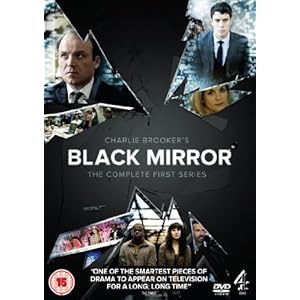
"2.  An interesting take on this is the British series Black Mirror, three separate stories of "our unease with the modern world."  Spoilers coming: In the second story, the youth are put on stationary bikes to create energy for the world, and are paid in, essentially, Facebook credits that serve also as money.  The only way out of this enslavement is to get on Hot Spot-- i.e. to become famous.  One young black man rises up against the system with the only violence he has available: he goes on Hot Spot and threatens to stab himself in the neck with a shard of glass unless he's allowed to rage against the machine.  But rather than gas the theatre or send in the snipers-- they give him his own weekly talk show where he is safely allowed to rage against the system, in between commercials.

"However, the true import of that episode is only revealed when considered with the first episode, in which the Princess (e.g. of Wales) is kidnapped, with a single ransom demand: the Prime Minister must have sex with a pig, on live TV.  Is the Princess's life wirth it?  Should they negotiate with terrorists?  But all of this is cover for the real conflict: if he does it, he'll be disgraced, most certainly not re-elected.

"He does it: it takes over an hour, some tranquilizers and some Viagra.  It is moving, because as he cries through the sex act, all of England is watching from pubs, cheering and jeering.  However, the final post-credits scene reveals the secondary consequence of the always-on, broadcast world: after a year, the Prime Minister is happily re-elected.  No one even remembers the pig incident. 

Together, the two episodes suggest that not only does appearing on TV trivialize events, but it temporizes them.   When everything is recorded, nothing is remembered."

via the Last Psychiatrist 

20 July 2012

For art school grads

Here's the always insightful Father Guido Sarducci on art school:


 And here's how to talk about your work once you graduate.
You're welcome.

19 July 2012

Travel teaches you things


“And many rose from their meal, upsetting chairs, others growing pale, ran along the corridors to the library, and the question asked in many languages, was heard; “What is it? What has happened?’ And no one was able to answer it clearly, no one understood anything, for until this very day men still wonder most at death and most absolutely refuse to believe in it.”

– Ivan Bunin, “The Gentleman from San Francisco”

More on distraction - George Packer


And he’s not alone. Just about everyone I know complains about the same thing when they’re being honest—including, maybe especially, people whose business is reading and writing. They mourn the loss of books and the loss of time for books. It’s no less true of me, which is why I’m trying to place a few limits on the flood of information that I allow into my head. The other day I had to reshelve two dozen books that my son had wantonly pulled down, most of them volumes from college days. I thumbed idly through a few urgently underlined pages of Kierkegaard’s “Concluding Unscientific Postscript,” a book that electrified me during my junior year, and began to experience something like the sensation middle-aged men have at the start of softball season, when they try sprinting to first base after a winter off. What a ridiculous effort it took! There’s no way for readers to be online, surfing, e-mailing, posting, tweeting, reading tweets, and soon enough doing the thing that will come after Twitter, without paying a high price in available time, attention span, reading comprehension, and experience of the immediately surrounding world. The Internet and the devices it’s spawned are systematically changing our intellectual activities with breathtaking speed, and more profoundly than over the past seven centuries combined. It shouldn’t be an act of heresy to ask about the trade-offs that come with this revolution. 

18 July 2012

We’re creating a culture of distraction


Joe Kraus, a Silicon Valley dude on a very high level, angel investor, serial entrepreneur, decries our culture of distraction. (You can read a transcript of his talk here).

The entire speech is worthwhile, but particularly the point he makes at the end:

Imagine the world 10 years from now. My third grader will be graduating high school. What does that world look like? I’d guess that it’s going to be more fast paced than ever. That people are going to be even more distracted, even more unable to pay attention to things for any length of time. Even less able to tolerate boredom. Even less able to pay attention to one another.
Now imagine your own child in stark contrast to that culture of distraction. Technically literate, but also balanced. A calmer presence. Not distracted. Not constantly seeking out mindless stimulation. An ability to make real human connection by not signaling that there might be something better on his smartphone to look at. An ability to pay attention to a problem for a long time.
I believe that the biggest gift we can impart on our kids is the ability to be mindful – to pay attention to the things and to the people that are actually around them. In 10 years, that’s going to feel VERY VERY different than the norm.
Have you noticed that it's no longer only Humanities majors and Luddites that are worried about the mental and emotional world we've made for ourselves? Lately, the techies and the engineers are warning us, too. The New York Times a few months back ran this article about how Silicon Valley honchos are educating their children.

No computers allowed. An elite that's closest to the tools and structure of the media environment who, when it comes to their own children, ensure that their kids aren't overexposed to its toxic effects.

For me, the realization that I needed to address my need to suck on the big electronic tit has been building for a long time. My attention span is shredded. I tend to fall into a new state, that of boredom and restlessness quite easily. It takes real effort to read actual books with 19th century sentences. Work that I don't remember having to devote before when I seemed to simply read.

I've lost a lot. I notice it most painfully when my attention drifts away from people I care about.

I'm not alone. People, mostly over 25, fret about this or joke about it a lot. They worry about their twitchiness, about the nagging impulse to Check On Something. A few practice media Sabbaths, a whole day away from electronic media.

Unfortunately, you can't just give it up, in the way you could -- theoretically, at least -- smoking or sugar or alcohol. Unless you're rich or a celebrity, you can't hire a cyber serf to do you online chores and connecting for you. You have to be online. People need to reach you on a cell. And, I like my mobile phone. I love that it can take pictures and 1080p HD video and tell me the weather and so on.

But, as the man said, you pay for what you get. I've paid in hours of time lost to . . . what? I can't tell you. I can hardly tell you what I read online last week. A few things stick with you, but the rest?  So, time lost and attention wasted, two of the more precious elements of life, drained away.

My plan is to follow up on some advice that I keep seeing repeated by some smart people. I'll start with the media Sabbath practice. That seems practical and appealing. I'll keep the computer off in the evenings and devote the time to reading some challenging books instead. If I go online, I'm going to practice staying on task, and I'll use the app Freedom when I'm writing or cutting video or messing around in Photoshop. I'm also going to get back on the mat and start meditating again, even though I feel like a New Age fool for saying so.

I have a feeling that this will be a struggle for the rest of my life, sort of like staying off tobacco, but it's time. It's past time.


17 July 2012

Monk time

Some excerpts from The Twilight of American Culture, by Morris Berman

Economic and technological appearances to the contrary, American civilization is in its twilight phase, rapidly approaching a point of social and cultural bankruptcy. The gap between rich and poor has never been greater; our long-term ability to pay for basic social programs is increasingly in question; the level of ignorance and functional illiteracy in this country is so low as to render us something of an international joke; and the takeover of our spiritual life by McWorld—corporate/consumer values—is nearly complete.
 As Marshall McLuhan once pointed out, if you could ask a fish what was the most obvious feature of its environment, probably the last thing it would say would be “water.” If you swim in it all the time, you just don’t notice it; this is how any culture functions. What is crucial, of course, is the nature of the water. In the case of the United States, the “water” is corporate consumerism.
 If literature survives at all, it is as a retreat for those who refuse to assimilate to American mass culture.
 When I say, then, that I am optimistic about contemporary “monastic” possibilities, it represents no more than an educated guess on my part, and maybe it is just wishful thinking; history remains a strange and unpredictable creature. But this much I do know: If we make no attempt to preserve the best in our culture, we can rest assured that the possibility of cultural renewal is pretty much ruled out.
 The more individual the activity is, and the more out of the public eye, the more effective it is likely to be in the long run. Not that like-minded souls shouldn’t make connections, but the key is to keep these links informal.
 Most of those who claim to oppose the world of corporate sci-tech consumerism will themselves become commodities, making the round of the talk shows and selling “soul” or “green earth” or “total health” as the latest commercial fad. Their ideas will become slogans on T-shirts; they will become the trendy spearheads of the latest form of “liberation,” soon to be forgotten for the next fad on the horizon.
 Craftsmanship should apply to all of life, and since its core value is the work itself—the very opposite of the purpose of American corporate consumerism—those genuinely committed to the monastic option need to stay out of the public eye; to do their work quietly, and deliberately avoid media attention. Indeed, a Taoist rule of thumb might be that if the larger culture knows about it, then it’s not the real thing.
 You and I can lead the “monastic” life, and we can start to do it right now. And don’t worry about being marginalized; this is good. As Don DeLillo says, in a culture such as ours, the writer, for example, is likely to be more significant for being marginal. “In the end,” he suggests, “writers will write not to be outlaw heroes of some underculture but mainly to save themselves, to survive as individuals.” The same can be said of all monastic activities, and of the people who engage in them.


For you fellow optimists, Berman has a blog, too, Dark Ages of America


via

03 July 2012

Love leaped out


Love leaped out in front of us like a murderer in an alley leaping out of nowhere, and struck us both at once. As lightning strikes, as a Finnish knife strikes! She, by the way, insisted afterwards that it wasn’t so, that we had, of course, loved each other for a long, long time, without knowing each other, never having seen each other… 


- Mikhail Bulgakov, The Master and Margarita

29 June 2012

Mrs Bridge


From a review in the Guardian by Joshua Ferris of a great and neglected novel: 
No doubt much of what oppresses Mrs Bridge is an unsustainable domestic condition. The generation of women after hers – that of her two daughters – would have more freedom, more opportunity, and more perspicacity. But as Connell pursues this "carbuncular presence", and as it becomes the great preoccupation of the book, deepening and expanding, like the exhalations of a crouching beast, we come to know it as something universal, harrowing, and irremediable: an existential fear, the sour taste of wasted life, the wild desire to rectify that waste. How does one prosper against the threat that one might be skimming over the years, ignorant of how life should have been lived, might be lived, must be lived? What shall I do? What shall I do?
There is no certain answer, and in this uncertainty, the ironic distance between Mrs Bridge and the reader is closed. We no longer see her as victim of one or another comical shock, an object of pity or ridicule, or a hopeless case of repression and neuroses. She is Meursault without the epiphany of atheism, Molloy without the solace of scatology, Dr Rieux without the nobility of resistance. She is a reflection of you and me, an exemplar of our shared humanity and all the terror and opportunity it so briefly provides – so necessary to seize, and so easy to squander. 

20 June 2012

McInerny on Gatsby


Fitzgerald conflates Jay Gatsby's act of self-invention with the promise of the new world, with the dream of a fresh start upon which the nation was founded: "And as the moon rose higher the inessential houses began to melt away until gradually I became aware of the old island here that flowered once for Dutch sailors' eyes – a fresh, green breast of the new world. Its vanished trees, the trees that had made way for Gatsby's house, had once pandered in whispers to the last and greatest of all human dreams; for a transitory enchanted moment man must have held his breath in the presence of this continent, compelled into an aesthetic contemplation he neither understood nor desired, face to face for the last time in history with something commensurate with his capacity for wonder. And as I sat there brooding on the old, unknown world, I thought of Gatsby's wonder when he first picked out the green light at the end of the dock. He had come a long way to this blue lawn and his dream must have seemed so close that he could hardly fail to grasp it." 


 To some, including many British readers over the years, this may seem like a lot of weight for the love story of a bootlegger and a southern belle to bear. But it seems to speak to a collective self-image dear to many American hearts – in spite of its unhappy ending. It's possible we Americans are not entirely rational about The Great Gatsby. Gatsby becomes fabulously wealthy, but he doesn't care about money in itself. He lives in a beautiful mansion and dresses beautifully, but everything he does is for love. He invents a hero called Jay Gatsby and then inhabits this creation, just as we hope to reinvent ourselves, some day, any day now, almost certainly starting tomorrow.


via

17 May 2012

"When someone fucks with you . . . "


Here’s something else I’ve learned this month:
When someone fucks with you – assuming, to steal some legal terminology, you’re the “reasonable man” – your initial reaction, provided you don’t strike back right away, will be to seek out advice from rational people. You’ll explain your situation to these rational people, and most times, they’ll advise you to “handle things professionally.” This typically entails keeping your mouth shut, ignoring the problem, and getting your work done. By staying above the fray, at least in theory, you’re demonstrating far more by your actions than your words.
This advice, I can tell you from experience, is absolute shit.
You’re being fucked with. Someone is doing something to you that negatively affects your job and your life. You listen to your rational friends and do nothing. You keep quiet, you say nothing, and you simply go about your day in a professional manner like nothing’s wrong. This goes on for a while until you eventually get engrossed in something else and forget you’re being fucked with. You get used to cruising above it.
You know what this approach does? It gives the guy who’s fucking with you a several week head start. It also gives them the impression that you’re not going to do anything back – which, in turn, gives them license to be even more audacious in how they fuck with you. Seriously, if you fuck with someone, and the guy doesn’t do anything back – and you’re still at a point where you haven’t gotten his attention or anyone else’s – it’s human nature to want to escalate things until someone takes notice and you start getting your way. Of course, that’s not how grown men operate, but that’s not the group I’m referring to here, obviously.
My advice, after having this happen to me, is to go the opposite way. You can’t keep your mouth shut. I knew this perfectly well going into my most recent situation because I’ve been fucked with before – by people who are professionals at fucking with other people. When you’re dealing with amateurs, however, it’s very easy to feel a false sense of security and assume nothing’s going to come of it. Don’t fall into this trap, though, because it’ll drag you straight into their fucking morass of bullshit – especially with amateurs, because they get sloppy and go for broke after a while. They’re too stupid and impatient not to.
The lesson here?
When someone fucks with you, particularly with regard to your money, you need to make it stop. Immediately, especially when you’re being fucked with by stupid, talentless people who don’t understand the consequences of what they’re doing.
via Clublife


09 May 2012

Two choices


"You have two choices here: live your life according to what some snarky chick in HR may or may not think of you — or do what you want."
--Susannah Breslin

26 April 2012

Portrait of the artist as a young dog

À l'automne de mes seize ans, j'étais étudiant au Cégep du Vieux-Montréal. L'année précédente on m'avait renvoyé de l'école secondaire Eulalie Durocher pour cause d'insubordination. J'avais des notes au dessus de la moyenne et j'étais en enrichi, tout ce que je voulais c'était qu'on me fiche patience et me laisse lire dans le fond de la classe pendant les cours que je trouvais inintéressants. Ça avait bien marché jusque-là, mais ça s'est compliqué quand je suis tombé sur un vieux prof aigri et incompétent qui s'était mis dans l'idée de me faire marcher au pas. C'est à lui et à ses manoeuvres auprès de la direction que je dois mon renvoi de l'école.


Après un mois à livrer des chips, des clopes et de la bière à triporteur pour un dépanneur du coin pour arriver à payer, règle paternelle, une pension auprès de mes vieux, je me suis retrouvé chez ma soeur qui habitait à Dolbeau au Lac St-Jean ou j'ai pu, coup de bol, m'inscrire à un programme d'études pour jeunes décrocheurs. Décrocheur, je ne l'étais pas et ça ne faisait pas encore une année entière que j'avais quitté les bancs de l'école, mais comme ce programme était nouveau et en manque d'étudiants/clients, on m'y a admis. En quelques tests de classement, j'ai obtenu les crédits de secondaire 5 pour les matières principales et trois mois plus tard j'avais mon diplôme en poche. Fuck you Eulalie Durocher.

Fier de mon coup, l'automne suivant, à seize ans, il y a de ça près de trente ans, j'étudiais en Lettres Cégep du Vieux-Montréal. J'étais jeune, j'avais du feu dans les yeux et j'y croyais dur comme fer, j'allais devenir écrivain, poète.

via

Copyright matters

A free internet is wonderful for democratized, unresearched commentary, and it works well as a library of sorts for content that no longer requires a defense of its copyright. But journalism, literature, film, music — these endeavors need people operating at the highest professional level and they need to make a living wage. Copyright matters. Content costs.


David Simon
 
via

Mind and spirit

That part inside each of us that makes plans, determines actions, and commits us to a path is called the mind. That part inside each of us that carries out plans, fulfills actions, and walks the path is called the spirit. The mind is the ultimate master of the body, and the spirit is its servant, to carry out the directions of the mind. The mind uses the spirit to accomplish all that it does. If the spirit acts too much on its own, you will fail. Insure you commit all things to your mind and strive to bring your spirit under subjection of your mind and the two will work as a seamless duo.


Yagyu Munenori, 1571 – 1646, in The Way of the Living Sword

20 April 2012

Tools and filmmaking


From A BitterSweet Life:
This blog post by Peter Webber encompasses my every thought about the true value of technology and the tools in filmmaking. The act of creation is centered not on materials but on a vision and its realization. Take Pablo Picasso and his cardboard sculptures hanging on the walls of museums or Joseph Cornell’s boxes made of found objects. The unavailability of tools should not hinder the artistic process while the availability of them should not hinder the essence of creativity, to create something original, both personal and universal, and timeless.


The Newest New Wave
Despite the fact that I am excited by the possibilities of new technology, the following blog is probably going to make me sound like an old grump.
Writing about social media over the last few days got me to thinking about the massive strides that film technology has taken in the years since I left school. At twenty-six, getting into Bristol University where they taught the rather grandly named Postgraduate Certificate in Radio, Film and Television (or the RFT course, as we called it) meant I finally had access to a veritable cave of filmmaking wonders in all its mid 80’s glory: Bolex cameras, Nagra synch-sound recorders, Steenbeck 16mm film flatbed and low band U-matic editing equipment and best of all an impressive VHS library of the greatest films ever made. I was thrilled. I never looked back.

Now all that stuff belongs in a museum, and VHS has long been consigned to the dustbin of antiquated media format history. Its all so shockingly pre-digital.

At sixteen, your average London-teen now has a phone with an HD capable 8 megapixel camera, and a computer with pro-branded animation and editing software, complete with history’s most comprehensive visual library: Youtube, which also doubles as an unparalleled means of distribution. Its all there, and it’s all taken for granted.

Film maker Aaron Stewart-Ahn who tweets as @somebadideas (and is a must-follow) touched on this when he tweeted (and I paraphrase) that the average 24-year-old has better tech than Jean Luc Godard and his cameraman Raoul Coutard, but that we don’t see films as brave, funny, entertaining, ambitious or unashamedly intellectual as the ones they made together. The technological advances of that era such as lightweight cameras also liberated the imagination of these film makers and led to the French New Wave. Nowadays there seems to be an overall diminution of ambition, an unfortunate limiting of horizons.

The fact that it is now possible to make films at a fraction of the cost one would have incurred in the 60’s or 70’s and then beam them at no cost at all into the phones and computers of literally millions upon millions of people around the world is astoundingly effortless. And perhaps that is the key to the question of quality.

The ramifications of all this change have yet to be fully revealed, and whilst the possibilities remain exciting, there is no doubt we are at a very different place to where we were say in 1991 when Francis Ford Coppola said the following in an interview.

“To me the great hope is that now that (with) these little 8mm video recorder and stuff now, people who normally wouldn’t make movies are going to be making them. And, you know, suddenly one day some little fat girl in Ohio is going to be the new Mozart, and you know, make a beautiful film with her father’s little camcorder and for once this whole professionalism about movies will be destroyed forever and it will become an art form. That’s my opinion.
http://www.youtube.com/watch?v=9WOnRAvdK2s%22%20%5Ct%20%22_blank
It is a prescient interview that in some ways anticipates the brave new world of Youtube. I love Youtube and can spend hours grazing it’s fertile plains. Yet it must also be said that we have yet to discover this new Mozart of the movies, there or elsewhere. The genius Coppola predicted has not risen from the wheat fields of Ohio. The new messiah is not yet amongst us. Writing in the 1940’s, Jean Renoir was firmly of the opinion that advances in technology in fact meant a diminution of inventiveness in the cinema. It’s certainly true that there is a magic in Melies’ Trip to the Moon that is sadly lacking in John Carter of Mars.
In the end, perhaps there is a limit to what can be expected from this democratisation of the means of film production. The most important commodity in all of this is not in fact the technology but the talent.
And that is always in limited supply.


20 March 2012